As a designer, your portfolio is your most powerful tool for showcasing your skills, process, and unique perspective. For those new to UX design, the idea of creating one might seem daunting, but it's an essential step.
Your portfolio is more than a simple collection of work — it’s a chance to stand out in front of recruiters and hiring managers. Through programs like the
Google UX Design Certificate, you'll be guided step-by-step through the creation of a portfolio that highlights your job-ready skills.
Here are some of the most impactful elements of strong UX design portfolios:
Curated work
Your portfolio should feature your best projects, carefully selected to demonstrate your strengths as a designer. Focus on quality over quantity, including projects that highlight different aspects of your expertise, such as wireframing, prototyping, or visual design.
Personal branding
Use your portfolio to communicate who you are as a designer. This includes showcasing your unique style, values, and the projects that excite you. These considerations can help recruiters see what sets you apart.
Storytelling through case studies
Engage your audience by presenting case studies for each project. Walk them through your design process step-by-step, from identifying the problem to delivering the final solution. Highlight key insights, challenges, and successes along the way to demonstrate your ability to think critically and solve real-world problems.
Simplicity and clarity
Keep your portfolio concise and easy to navigate. Use minimal text to describe your work; focusing on main takeaways rather than lengthy explanations. Simple navigation helps users easily explore your project and find important pages, such as your contact information.
Responsive design
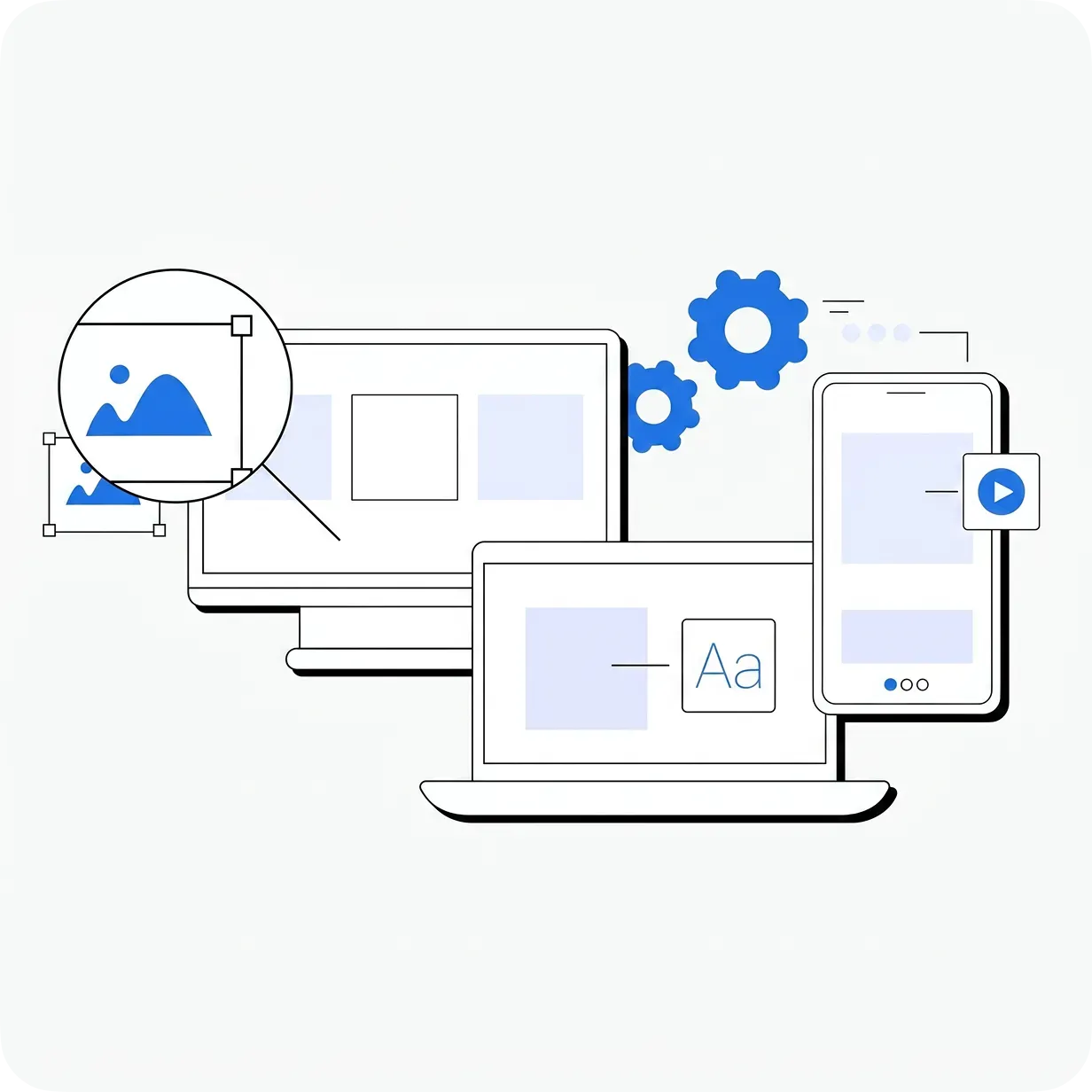
Make sure your portfolio is optimized for all current devices. A responsive design ensures your work looks polished and professional no matter how someone views it. Test your site across multiple devices to catch any issues before sharing it with recruiters.