How to prepare for an interview


Why interview preparation matters
Employers tend to look for more than just on-paper qualifications. Candidates who show confidence, enthusiasm, adaptability, and quick thinking are more likely to leave a lasting impression. Fortunately, these qualities are skills that can be developed like any other.
Effective interview prep helps to:
- Build confidence: Rehearsing major talking points and potential questions may reduce anxiety and help you feel more grounded.
- Increase adaptability: By practicing and internalizing your own story, you become more prepared to respond thoughtfully to unexpected questions or shifts in the conversation.
- Establish priorities: Preparation helps to identify what matters most, so you can evaluate how well the company aligns with your values and expectations.
Pre-Interview research
The best way to build confidence for an interview is through preparation. This involves three core components: conducting a deep dive into the company's current strategy, clearly understanding the specific role's expectations, and developing a set of thoughtful questions for the interviewer. Mastering these three areas allows you to effectively map your own skills to the employer's needs.
Researching the company
When doing your research on a potential employer, consider all the possible ways you can learn about them. In addition to doing a deep-dive on their website, look into their things like their recent press releases, industry reports, social media posts, or even their customer reviews. The key goal is to understand the company's current priorities and to show that you're not just looking for a job, but the specific role at the company you're interviewing for. A well-prepared candidate can speak knowledgeably about the company's recent actions and how their role will contribute to future success.
Understanding the role
Carefully review the job description, paying close attention to the responsibilities and required skills. Use this information to anticipate the kinds of questions you might be asked. By understanding the role's metrics for success, you can better prepare to map your own skills and experiences directly to their needs.
Preparing thoughtful questions
The best interviews are two-way conversations. Prepare genuine questions for your interviewer to demonstrate your interest in the company, team, and the role you’re interested in. Remember, an interview is just as much of an opportunity for you to learn about a potential employer, as it is a chance for them to learn about you.
Focus on questions that show you're thinking about the job's success, such as:
- "What does success look like in this role during the first 90 days?"
- "What are the biggest challenges the team is currently facing, and how would this role help solve them?"
Mastering common interview questions
While there’s no set-in-stone standard for how an interview is conducted and what you might get asked, there are broadly four different categories of questions you’re likely to be asked: “tell me about yourself” questions, behavioral questions, situational questions, and more general or personality-based questions.
“Tell me about yourself,” a.k.a. the “elevator pitch”
Asking you to briefly describe yourself is something most interviewers are likely to do, and it is commonly one of the first questions they’ll ask. The interviewer is asking this question for a reason: they want a clear, concise summary of who you are, what you do, and the reason you might be a good fit for this specific role. A common mistake is to tell your entire professional or personal history, which can quickly lose the interviewer’s attention.
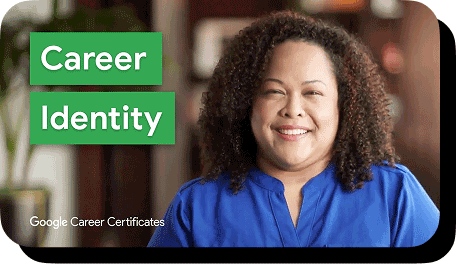
Want help crafting your own “Career Identity Statement”? This quick video walks you through what it is and how to write one.
Answer behavioral questions using the STAR method
Behavioral questions assess how you've handled yourself in the past, often asking you to describe a situation where you had to make a difficult decision or overcome a challenging technical problem. The STAR method is your go-to strategy for answering these, as it provides a structured, positive framework for even the most challenging questions.
The STAR method stands for:
- Situation: Describe the context or background of the situation you were in.
- Task: Explain the specific challenge, responsibility, or goal you needed to address.
- Action: Detail the steps you took to handle the situation or complete the task.
- Results: Highlight the outcome of your actions, emphasizing measurable results or what you learned.
Whenever possible, try to include specific details and data to support your answers. For example, saying “I negotiated a 15% reduction in costs with our vendors, saving the company $50,000 annually without compromising quality” is more effective than saying “I helped save the company money.” Answers like these demonstrate impact and offer interviewers more insight into your decision-making.
Situational and technical questions
Situational questions are typically hypothetical situations posed by the interviewer to evaluate your thinking process as you work through a specific challenge. These questions are often directly relevant to the role you’re interviewing for. A good strategy is to point to specific actions you would take in that scenario. Map out how you’d measure success, set milestones, determine roles and responsibilities, etc. and explain your thinking behind each decision.
You can also draw on past experience, linking the hypothetical situation to specific examples from your work history where you had similar problems. Just make sure to emphasize the connection and how it gives you better insight into the hypothetical.
General or personality-based
In addition to the questions above, interviewers may also ask some more general questions about you as a person. Your answers here help show off your personality, motivations, working style, and more. This helps interviewers assess how you might integrate with the rest of the team and the company culture overall. Some of these questions might include:
- What are your strengths and weaknesses?
- Where do you see yourself in five years?
- Why are you leaving your current job?
The best way to handle any interview questions is to be generally honest, but keep it positive and professional. Do your best to be direct and concise with your answers, and try to speak slowly and clearly, even if you’re a little nervous.
Mock interviews: Practice makes perfect
Practicing is essential for successful interviewing, giving you a chance to respond to specific questions and refine your tone. Knowing what the common question types are is only half the battle – you’ll want to practice what kind of answers you would respond with for each kind to build fluency.
While you want your key messages to be well-practiced to reduce anxiety, practice helps ensure your answers don't sound too scripted so you maintain authenticity. You have several effective options for mock interviewing: you can set up a session with a friend, mentor, or a career counselor; you can record yourself to critically review your responses; or you can use AI-powered tools for on-demand feedback.
Practicing for interviews with AI
AI-powered tools offer an excellent way to get immediate, on-demand practice. For example, the Gemini mobile app offers Gemini Live, which you can use to simulate a real-time, conversational interview, providing instant, structured feedback on your responses. You could consider trying your hand at general interview practice to nail your elevator pitch and follow-up questions, or practice for specific fields like Digital Marketing or Data Analytics.
The importance of post-interview follow-up
An often overlooked interview tip is the follow-up. A brief thank-you note or email mentioning something you enjoyed about the conversation shows you were genuinely engaged while emphasizing your enthusiasm. To maximize impact, aim to send this follow-up within 24 hours. This is important because it demonstrates your continued interest in the role and allows you to include specific details while the conversation is still fresh in your mind, as well as your interviewer’s.
You can also use the follow-up to mention anything important you forgot to include in your interview. Tools like Gemini can make this process more efficient by quickly drafting a personalized starting point for your note, allowing you to focus on adding your unique details.
Tip: If you don’t have the interviewer’s email, consider asking other people you’ve engaged with during the hiring process (for example, a recruiter or human resources representative) to forward your note along.
Learn more
Successful interview preparation requires more than just practice; it involves balancing a solid strategic foundation with highly targeted, role-specific research.
While generalized resources like this guide can provide a comprehensive start to your interview prep, it’s important to remember that much of your preparation will be specific to the company and the role that you're interviewing for.
To efficiently build that foundational framework and integrate interview practice into your overall job search strategy, consider exploring the course, Accelerate Your Job Search with AI. This comprehensive guide will show you how to leverage AI tools at every stage, allowing you to master the core skills and dedicate more time to that crucial, role-specific research.
In the course, you’ll learn to effectively prompt generative AI tools to help you:
- Uncover your transferable skills and draft a Career Identity Statement using Career Dreamer.
- Get structured feedback on your resume and quickly tailor it for any job description.
- Develop a job application tracker to efficiently track your job applications and networking progress.
- Practice interviewing in real-time with Gemini Live to master the STAR method.
More from Grow with Google